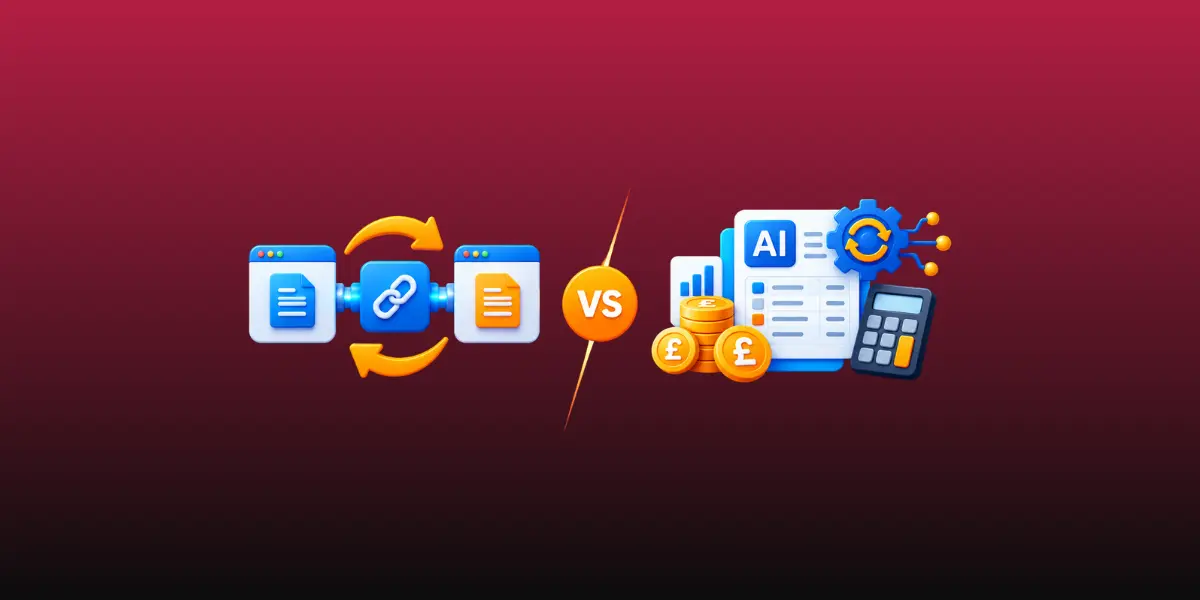

Choosing between bridging software and full accounting software depends on your financial complexity and how much automation you need. Bridging software lets sole traders and landlords submit MTD ITSA updates using existing spreadsheet-based records, making it a simple, affordable option for those with fewer transactions. Full accounting software provides a complete bookkeeping solution with features such as bank feeds, automated expense tracking, and financial reporting. While it costs more, it can reduce manual work and support businesses with more complex financial needs. Selecting the right software can simplify quarterly reporting and improve long-term financial management.
- Bridging software is a cost-effective option for sole traders and landlords with simple financial records.
- Full accounting software combines bookkeeping, automation and MTD ITSA submissions in one system.
- Both solutions must meet HMRC’s MTD ITSA compatibility requirements.
- Businesses with fewer transactions may find bridging software sufficient.
- Growing businesses and those managing multiple income streams may benefit from full accounting software.
From April 2026, MTD ITSA applies to individuals with qualifying income above £50,000, with the threshold reducing to £30,000 from April 2027. Affected taxpayers must keep digital records, submit quarterly updates, and complete a final declaration using compatible software.
However, not every taxpayer requires a complete accounting platform. Some sole traders and landlords may only need bridging software to connect existing spreadsheets with HMRC. In contrast, others may benefit from full accounting software that provides automation, reporting and improved financial visibility.
The right choice depends on factors such as transaction volume, financial complexity, income sources and the level of support required. This guide compares bridging software and full accounting software for MTD ITSA, helping sole traders and landlords choose the solution that best suits their needs.
Understanding MTD ITSA Software Requirements
MTD ITSA aims to digitise income tax reporting by replacing traditional paper-based record-keeping with digital records and online submissions. Affected sole traders and landlords must keep digital records of their income/expenses and use compatible software to send required information to HMRC.
The software must allow taxpayers to:
- Maintain digital records of income and expenses
- Submit quarterly updates to HMRC
- Complete the final declaration at the end of the tax year
- Report relevant income details required for their tax position
HMRC does not provide its own bookkeeping system. Instead, taxpayers must choose recognised third-party software providers that can connect with HMRC systems. In practice, taxpayers generally have two options:
- Bridging software – A simple solution that connects existing spreadsheets or bookkeeping records with HMRC for digital submissions.
- Full accounting software – A complete bookkeeping platform with built-in MTD ITSA functionality, automation, and reporting features.
Understanding how these options work can help businesses choose the most practical solution.
What Is Bridging Software?
Bridging software is designed for taxpayers who already manage their finances using spreadsheets or basic bookkeeping systems but need a way to submit information digitally to HMRC. Rather than replacing an existing record-keeping process, bridging software connects current records with HMRC’s MTD system.
For example, a landlord with a small property portfolio may already record rental income and expenses in Excel. Instead of transferring everything into a new accounting platform, they can use bridging software to submit the required information digitally.
Advantages of Bridging Software
The main benefit of using bridging software is simplicity. It lets taxpayers keep using familiar systems while meeting MTD ITSA requirements, making it suitable for businesses with straightforward finances and limited transactions.
Lower Cost
Bridging software is usually more affordable than full accounting platforms. Some solutions offer free or low-cost options, making them suitable for smaller businesses and landlords who only need digital submission capability.
Easy Setup
Because it works with existing records, bridging software usually requires less disruption compared with moving to a completely new accounting system.
Familiar Record Keeping
Taxpayers who already manage income and expenses through spreadsheets do not need to learn a new bookkeeping platform.
Limitations of Bridging Software
While bridging software works well for simple financial situations, it has fewer features than a full accounting system. Most bridging solutions do not include advanced tools such as:
- Automated bank feeds
- Invoice management
- Expense tracking
- Real-time financial reporting
Because you still maintain records separately, you may need more manual input. This can become inefficient for businesses with higher transaction volumes or multiple income sources.
What Is Full Accounting Software?
Full accounting software provides a complete financial management system, not just a way to connect existing records to HMRC. These platforms combine bookkeeping, reporting and MTD ITSA submissions in one place.
Typical features include:
- Income tracking
- Expense management
- Invoice creation
- Bank reconciliation
- Automated transaction imports
- Expense categorisation
- Financial reporting
- MTD ITSA submissions
Popular platforms include Xero, QuickBooks, FreeAgent and Sage. These systems are designed for businesses that want to manage their financial activity through a single platform.
Advantages of Full Accounting Software
Greater Automation
Full accounting software reduces manual administration by automating routine tasks such as importing transactions, matching payments and categorising expenses. For example, a sole trader managing multiple clients can connect bank accounts, track expenses and generate reports without constantly updating spreadsheets.
Better Financial Visibility
Unlike bridging software, full accounting platforms provide ongoing insight into income, expenses and overall business performance. This allows businesses to make informed decisions throughout the year rather than reviewing finances only during tax preparation.
Easier Scaling
As businesses grow, their financial activity often becomes more complex. Full accounting software can handle increased transactions, multiple income streams, and more detailed reporting requirements.
Limitations of Full Accounting Software
The main disadvantages are cost and setup requirements. Businesses may need to consider:
- Monthly subscription costs
- Time required to learn the system
- Possible migration of existing records
For very small businesses with simple finances, these additional features may not always provide enough value to justify the cost.
Bridging Software vs Full Accounting Software: Key Differences
|
Feature |
Bridging Software |
Full Accounting Software |
|
Cost |
Lower-cost option |
Higher monthly cost |
|
Record Keeping |
Uses existing spreadsheets or records |
Complete bookkeeping system |
|
Automation |
Limited automation |
Automated bookkeeping features |
|
Setup |
Quick and simple |
Requires initial setup |
|
Learning Curve |
Easier for spreadsheet users |
Requires time to learn the platform |
|
Bank Feeds |
Usually unavailable |
Usually available |
|
Reporting |
Basic or limited |
Detailed financial reporting |
|
Scalability |
Suitable for simple businesses |
Suitable for growing businesses |
|
Best For |
Low-volume sole traders and landlords |
Businesses with more complex finances |
Costwise Which Option Is More Affordable?
Cost is often a key factor when choosing MTD ITSA software. Bridging software is generally more affordable because it mainly focuses on connecting existing records with HMRC. This makes it suitable for taxpayers who already maintain accurate spreadsheets and only need a way to submit information digitally.
Full accounting software usually involves a monthly subscription but provides additional features beyond MTD ITSA compliance, including automated bookkeeping, invoicing, reporting, and financial management tools.
For example, a landlord with one or two properties and simple records may not need a complete accounting platform. However, a contractor managing multiple clients or a growing business may benefit from investing in software that reduces manual administration.
The cheapest option is not always the most efficient. Businesses should consider the time saved, improved accuracy, and long-term value that automation can provide.
Automation and Efficiency
The biggest difference between bridging software and full accounting software is the level of automation available. With bridging software, taxpayers remain responsible for maintaining their records and ensuring information is accurate before submission. This approach works well for:
- Small landlords
- Freelancers with limited transactions
- Sole traders using simple spreadsheets
However, manual record-keeping can become more time-consuming as transaction volumes increase.
Full accounting software automates many routine bookkeeping tasks, including:
- Importing bank transactions
- Matching payments
- Categorising expenses
- Producing financial reports
For businesses looking to reduce administration and spend more time on daily operations, full accounting software can provide significant efficiency benefits.
Which Software Should Landlords Use for MTD ITSA?
The right MTD ITSA software for landlords depends on the size of their property portfolio. Landlords with a small number of properties and straightforward rental records may find bridging software sufficient. If they already track rental income and expenses using spreadsheets, bridging software can provide a simple way to submit required information to HMRC without changing their existing process.
For example, a landlord with one or two rental properties may only need to record:
- Rental income received
- Property maintenance costs
- Insurance expenses
- Professional fees
- Other allowable expenses
In these cases, moving to a full accounting platform may offer more features than you need. However, landlords managing multiple properties or more complex rental arrangements may benefit from full accounting software. Larger portfolios often involve:
- Multiple rental payments
- Different expense categories
- More frequent transactions
- Detailed record-keeping requirements
Full accounting software can help automate these tasks by importing transactions, categorising expenses, and maintaining organised digital records for quarterly submissions.
Landlord Software Comparison
Landlord Situation | Recommended Option |
One or two properties with simple records | Bridging software |
Spreadsheet-based bookkeeping | Bridging software |
Multiple rental properties | Full accounting software |
High transaction volumes | Full accounting software |
Need automated reporting | Full accounting software |
The key factor is not simply the number of properties owned but the level of financial activity involved. A landlord with fewer properties but more complex transactions may still benefit from a full accounting system.
Which Software Should Sole Traders Use?
For sole traders, the best software choice depends mainly on transaction volume, business complexity and the amount of bookkeeping support required. Sole traders with simple income records may find bridging software suitable, particularly if they already use spreadsheets and have a limited number of transactions.
For example, a freelancer with:
- A small number of clients
- Few monthly expenses
- Straightforward income records
may be able to manage their finances effectively using spreadsheets alongside bridging software. However, growing businesses may find full accounting software more practical. Sole traders managing multiple clients, regular invoices, or higher transaction volumes can benefit from automation and improved financial visibility.
Full accounting software can help by:
- Reducing manual data entry
- Tracking expenses automatically
- Organising financial records
- Preparing information for MTD ITSA submissions
Sole Trader Software Comparison
Sole Trader Situation | Recommended Option |
Occasional freelance income | Bridging software |
Few transactions each month | Bridging software |
Multiple clients | Full accounting software |
Regular invoicing | Full accounting software |
Growing business | Full accounting software |
Choosing software based only on current needs can create challenges later. Sole traders should also consider future growth and whether their chosen system can support increasing financial activity.
Free MTD ITSA Software Options for Sole Traders and Landlords
Many taxpayers look for free or low-cost solutions when preparing for MTD ITSA. Whether free software is available depends on the provider, the features you need, and the type of income you report. HMRC does not provide its own complete MTD ITSA bookkeeping platform. Instead, taxpayers must choose from recognised software providers that meet HMRC’s compatibility requirements. Some providers offer free plans or entry-level packages for taxpayers with simpler needs, while more advanced bookkeeping, reporting and automation features may require paid subscriptions.
Free and Low-Cost Options for Sole Traders
Sole traders with straightforward financial records may consider:
- Free or low-cost bridging software for spreadsheet-based records
- Entry-level accounting packages with basic bookkeeping features
- Software designed for simple income reporting
Bridging solutions can be particularly useful for sole traders who already maintain spreadsheets and only need digital submission capability. Before choosing free software, taxpayers should check that it supports the required MTD ITSA features, including digital record keeping, quarterly updates and the final declaration.
Free and Low-Cost Options for Landlords
Landlords with smaller property portfolios may also find affordable software options suitable.
A simple landlord setup may only require:
- Rental income tracking
- Expense recording
- Digital record keeping
- HMRC-compatible submissions
For landlords managing several properties or more complex rental arrangements, a dedicated landlord accounting solution or full accounting platform may provide better long-term value. Before selecting software, landlords should consider whether the system can handle:
- Multiple properties
- Different income sources
- Detailed expense categories
- Future portfolio growth
How to Choose Between Bridging Software and Full Accounting Software
When deciding between bridging software and full accounting software for MTD ITSA, consider the following factors:
1. Number of Transactions
If you only manage a small number of transactions each month, bridging software may be sufficient. However, if you regularly process multiple payments, expenses, or invoices, full accounting software can reduce manual work and improve accuracy.
2. Complexity of Your Finances
Simple income and expense records are usually easier to manage with bridging software. Businesses with multiple income streams, complex expenses, or detailed reporting requirements may need a more complete accounting system.
3. Time Available for Bookkeeping
Taxpayers who are comfortable maintaining spreadsheets may prefer bridging software. Those looking to reduce administration and automate routine tasks may benefit from full accounting software.
4. Future Growth Plans
A system that works for a small business today may become unsuitable as it grows. Choosing scalable software early can reduce disruption and avoid transferring records to a new platform later.
Final Thoughts
Choosing between bridging software and full accounting software for MTD ITSA depends on your financial situation, transaction volume, and the level of support you need. For sole traders and landlords with straightforward records, bridging software provides an affordable way to meet MTD ITSA requirements without changing existing processes. For businesses with higher transaction volumes, multiple income streams, or future growth plans, full accounting software can provide valuable automation, improved accuracy, and better financial visibility.
The best solution fits your current needs while supporting your long-term plans. Reviewing your bookkeeping processes early can help you select the right software and prepare for smoother quarterly reporting. At Cartwheel International, we help sole traders and landlords understand their MTD ITSA obligations, choose suitable software, and manage the transition to digital reporting.
Frequently Asked Questions
Yes, bridging software can work well for sole traders and landlords with simple records. It lets you submit digitally to HMRC while keeping your existing spreadsheet-based records.
No. The correct choice depends on your financial complexity. Simple businesses may only need bridging software, while those requiring automation and reporting may benefit from full accounting software.
Some providers offer free or low-cost MTD-compatible options. However, check that the software supports your required features, including quarterly updates and final declarations.
Yes, landlords can continue using spreadsheets if they meet digital record requirements and use compatible software for HMRC submissions.