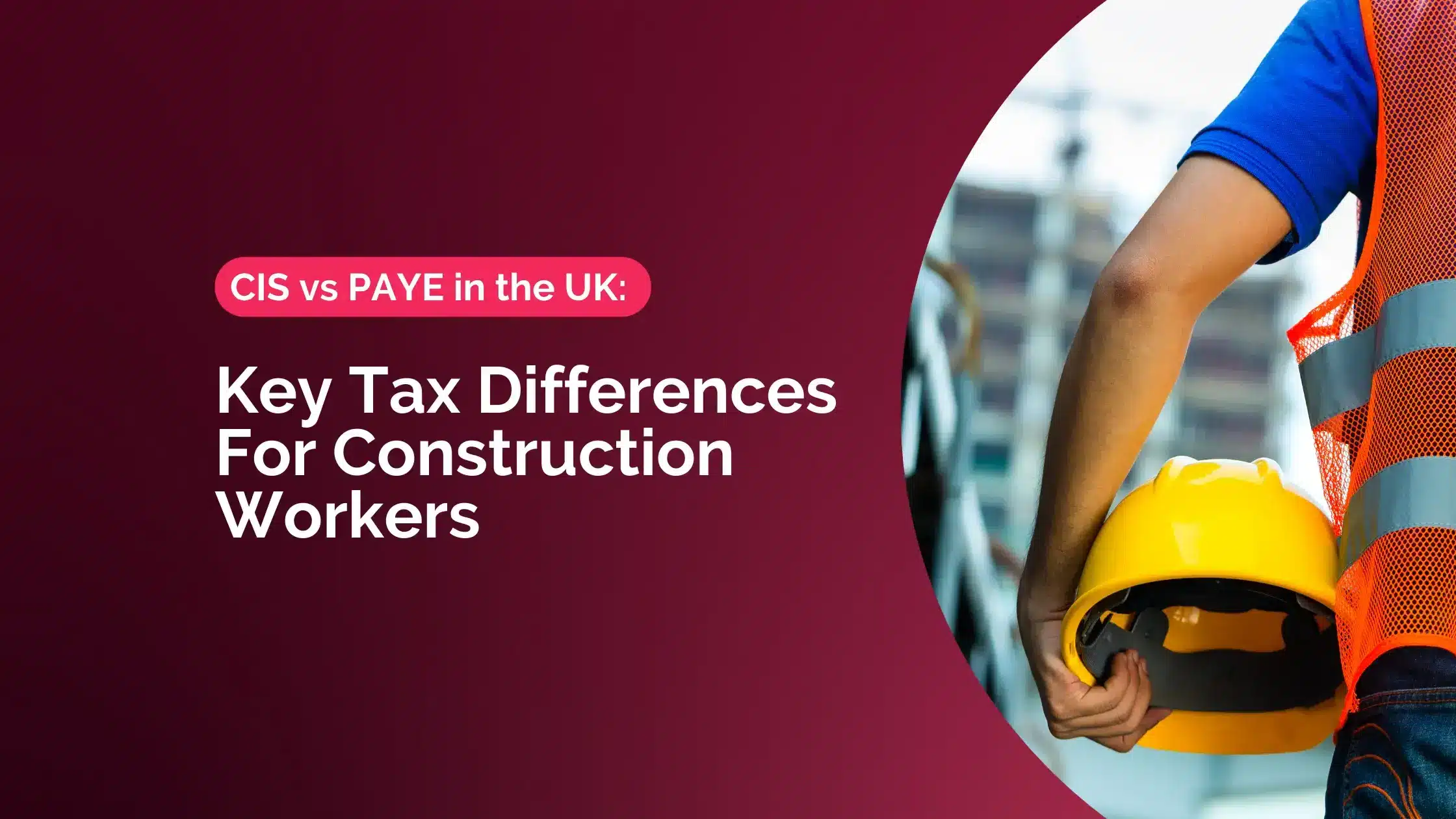
When hiring construction workers in the UK or working in the construction industry, you’ll frequently encounter the terms CIS (Construction Industry Scheme) and PAYE (Pay As You Earn). These two tax systems, managed by HMRC (Her Majesty’s Revenue and Customs), are crucial for determining how income tax is collected, but they apply to different categories of workers. CIS primarily applies to self-employed subcontractors in the construction industry. Under the CIS, tax is deducted at source from payments made to subcontractors before they receive their wages.
On the other hand, PAYE is for employees working in the construction sector. With PAYE, employers automatically deduct income tax and National Insurance contributions (NICs) from an employee’s wages before they’re paid.
What Is CIS and PAYE
CIS: CIS stands for the Construction Industry Scheme. It is a UK tax scheme set up by HMRC for people working in the construction industry. The scheme controls how tax is deducted from payments made to subcontractors.
Who CIS applies to
CIS mainly applies to self-employed subcontractors who carry out construction work, such as builders, electricians, plumbers, and decorators. It also applies to contractors who hire subcontractors and pay them for construction services.
How CIS tax deductions work
Under CIS, contractors deduct tax from a subcontractor’s pay before making the payment. The standard deduction rate is 20% for registered subcontractors. If a subcontractor is not registered with HMRC, the deduction increases to 30%. These deductions are sent to HMRC as advance tax payments, and subcontractors must still complete a Self Assessment tax return at the end of the tax year.
PAYE: PAYE stands for Pay As You Earn. It is the system HMRC uses to collect income tax directly from wages and salaries. Under PAYE, tax is taken before the employee receives their pay, so there is no need to set money aside for tax later.
Who PAYE applies to
PAYE applies to employees working under an employment contract. This includes full-time, part-time, and temporary workers. If you are employed by a company and receive regular wages, you are usually paid through PAYE.
How PAYE tax and NI deductions work
With PAYE, the employer deducts income tax and National Insurance (NI) from the employee’s pay each payday. The amount deducted depends on the employee’s tax code and earnings. The employer then pays these deductions to HMRC on the employee’s behalf, along with employer National Insurance contributions.

→ No hidden fees. No gimmicks
Understanding the Key Differences Between CIS and PAYE
Feature | CIS (Construction Industry Scheme) | PAYE (Pay As You Earn) |
Employment Status | Self-employed subcontractors; not considered employees; no statutory employment rights | Employees under an employment contract; entitled to benefits like sick pay, holiday pay, and pensions |
How Tax Is Deducted | Tax is deducted by the contractor before payment; 20% for registered, 30% for unregistered subcontractors | Tax is automatically deducted by the employer from wages based on the employee’s tax code |
National Insurance (NI) | Subcontractors pay their own NI contributions; deductions only cover income tax | Employer deducts employee NI and pays employer NI contributions on top of salary |
Responsibility for Tax Reporting | Subcontractors submit Self Assessment tax returns; contractors submit monthly CIS returns to HMRC | Employer handles all reporting to HMRC; employees usually do not file a tax return unless they have extra income |
Which Tax System Applies to You: CIS or PAYE?
Knowing whether CIS or PAYE applies to you depends mainly on your employment status and the type of work you do.
- CIS is for self-employed subcontractors working in the construction industry. If you provide services like building, plumbing, electrical work, decorating, or other construction-related jobs and work for a contractor, you are usually paid under CIS. You are responsible for your own tax and National Insurance.
- PAYE is for employees who work under a contract of employment. If you are on a regular salary or wage, your employer handles tax and National Insurance deductions automatically, and you receive employee benefits like holiday pay, sick pay, and pension contributions.
Final thought
Understanding the difference between CIS and PAYE is crucial for anyone working in or hiring within the construction industry. CIS is designed for self-employed subcontractors who are responsible for managing their own tax and National Insurance, while PAYE is for employees whose tax and NI are automatically deducted by their employer. Choosing the correct scheme ensures you pay the right amount of tax and receive the benefits you are entitled to, such as holiday pay, sick pay, and pension contributions.
Being on the wrong scheme can lead to unexpected tax bills, penalties, or loss of employment rights, so it’s essential to confirm your status and stay fully compliant with HMRC rules.
If you’re unsure which scheme applies to you, Cartwheel International offers a free consultancy service to guide you through CIS and PAYE, making it easier to make the right choice and avoid any issues with HMRC.